
For many years even before we shifted to Panchgani in 1997, I have lived with the word ‘Devrai’ rumbling inside my head. So what does it mean? All over our sub-continent, there are tiny pockets of forest that have been protected by local people due to the presence of a village deity. Over hundreds of years these have grown into tiny islands of rich bio-diversity supporting countless species of flora and fauna. In Maharashtra, these sacred groves are called Devrais. Living in the hustle and bustle of Mumbai, I often dreamt of a home deep inside a Devrai – away from everything, in the lap of Mother Nature herself. At a sub-conscious level, this was perhaps a key driver for our shift to Panchgani.
After living in a rented house for eight years, we finally bought our own two acre piece of land in 2004. We had been looking for a densely forested patch, a readymade Devrai. But the Divine had other plans. We ended up staring at a barren, degraded patch with no trees on it. Except for one old, gnarled Umbar (Ficus Racemosa). Worse, there was no soil either; just lateritic murum, rock dust. Many deep breaths later, we decided to name it Devrai. It was perhaps ordained that we would have to create our own Devrai. Little did we know, this was going to be, and continues to be, our lifetime’s mission!
From the outset, we were clear that we didn’t want heavy earth moving machinery on our land. So no JCBs levelling the steepish slope into terraces. As we didn’t want to do farming, this was unnecessary anyway. Except for the small footprint of the house we were going to build, we retained the natural contours of the land and planned our tree plantation accordingly.
If we aimed to create a forest, we needed to have water in plenty. Outside of the monsoon months, Panchgani is bone dry. Our land was particularly vulnerable as murum does not hold moisture at all. Nevertheless, not far from our Umbar tree, we dug an open well and were lucky to find some water. The water diviners who saw our land were almost unanimous that there was no possibility of a bore well anywhere on our property. So we were dependent on domestic municipal supply and our modest open well. Given this limited availability of water, all our planting activity would have to be restricted to the monsoon months only. Reality began to dawn on us and our objective of creating a Devrai seemed harder than ever before.
One thing was clear – we were trying to create not a garden, not just a forest; we wanted a forest-garden. This raised the question of what to plant – what trees, what climbers and what shrubs? Conventional thinking amongst the ecologist community dictated an almost fanatical adherence to planting only native species. No “exotics”. Whatsoever. We however thought differently; except for a handful, almost all the vegetables we eat everyday are exotic – potato, chilli, tomato, pumpkin, sweet potato, corn, cabbage, cauliflower, carrot…the list goes on. Several tree species too, that we have assumed are native, have actually come here from outside. We therefore evolved our own thumb rule – if the tree thrives well on the land without causing harm to the soil or to its surroundings, it is welcome at Devrai. So, with humble apologies to the devout, we have always followed this mantra in our planting choices. Devrai now has a mix of natives like Banyan, Peepal, Mango, Saraca Indica, Jamun, Terminalia Tomentosa, Terminalia Ballerica, Hirda and Arjun to name a few. We also have several exotics such as Brownea, Magnolia, Bauhinia Blakeana, Ylang Ylang, Avocado, Longan and Durian. At the same time we constantly eliminate species like Gliricidia, Subabul and Eucalyptus. We have also mostly eliminated Lantana shrubs. To stabilize the slopes and prevent erosion, we have planted Vetiver grass, Karvi and lots of bamboos. We have planted at least 16 species of bamboo itself, including the magnificent Giant Bamboo which has become a notable feature of Devrai.
With the increase in diversity of flora, we have simultaneously witnessed a rapid increase in sightings of varied species of birds and small animals at Devrai. Depending on the season, we now regularly see Paradise Flycatchers, different kinds of Minivets, many different Sunbirds, Grey Hornbills, Drongos, Pittas and several other delightful birds, some of which we are yet unable to identify. Once, but once, we have had the honour of playing host to a pair of Great Pied Hornbills too! I still remember the deep powerful woosh of their wings as they took off. As for animals, we occasionally get to sight the Giant Squirrel, the odd Barking Deer, Mongoose, Wild Boar and of course, snakes. Apart from the Big Four venomous ones, we see flouroscent Vine Snakes, Rat snakes, Shieldtails, Cat snake (once) and Trinket snakes to name just a few.
All in all, we seem to have created an environment where we truly feel part of nature, where we are just another species inhabiting this land and sharing it with its rightful owners; we are not masters who own this place. We are occupants just like other flora and fauna who have blessed us with their presence.
So what have we learnt about the natural world in the last twenty odd years that we’ve been here? Short answer – humility. As the cliché goes – the more you know the more you realize how little you know. Take for instance the act of planting a tree. We have to bring our entire knowledge of the tree’s preferences – soil, sunlight, moisture – and then match them with the chosen spot. Planting even ten feet away could make the difference between vigor and withering. I humbly have to report that we still get it wrong often! We tried various ways to improve our soil and learnt many things in the process. We once had a vermi-compost pit which after lasting a few months was destroyed by rats. We discovered that cow dung manure leads to termite infestation and have lost grown trees to termites. Adding bone meal to flowering and fruiting plants might be great for potted plants. On our land, however, bone meal attracts wild boar which plough the entire land and destroy young plants. So now we rely entirely on fallen leaves and leaf compost. This has actually created soil where earlier, there was just murum. Since our land is now covered with dry leaves in summer, we have to be particularly careful about vanva, the annual practice of burning the hill slopes. A lot of our energy goes into preventing this catastrophe from happening. Rainwater harvesting was another area where we discovered that much of the wisdom we read in books, does not work on the ground. To sum it up, in nature we have learnt that everything is contextual. There are few universal truths. You must try every technique, every text book advice and see what works for you in your own context. Failures have happened repeatedly. Each time we have learned something new. That’s simply the way it is.
Often when Mandakini and I look out at the sun rising above the Giant Bamboos through our bedroom window, we realize how grateful we are for being able to live here, in the midst of Mother Nature, in the lap of a Devrai whose creation we have had a small part in. We realize how little we ourselves have done. At best we have been protectors. As for regeneration, Nature does it herself.
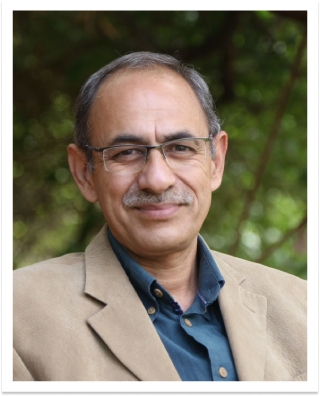
Co-founder and Vice-Chairman of Devrai Art Village